Friday, January 12, 2018

Artemis

Artemis Artemis by Andy Weir
My rating: 4 of 5 stars

I loved Weir's first book, the Martian, because it felt so true to life despite being set on Mars. His second book feels much more like fiction, and though it was entertaining, I had a harder time connecting with the characters and their life-and-death trials.

Jazz was a hard nut to crack - she's very emotionally guarded, for good reason we find out. I was rooting for her the whole time, and I loved her inventiveness and quick wits, but she kept making terrible decisions!

Jazz's relationship with Dale is really confusing - when we first meet him, he seems very antagonistic towards her, mocking her for not passing her EVA exam, but we're supposed to believe he's actually deeply apologetic for betraying her and trying to get back in her good graces? That feels false to me. He should have been more sympathetic to her in that first meeting, regardless of how she spoke to him. Also, I don't think Jazz owes him any forgiveness. Regardless of whether her boyfriend would have figured out he was gay (or bi) eventually and left her, the two closest people in her life lied to her and cheated on her with each other. Forgiveness for something as heinous as that needs to be earned. Maybe saving Jazz's life is a step in the right direction, but her reservations make sense to me.

Svoboda (which means freedom in russian, by the way) is an interesting character - we don't actually know much about him, other than he is super smart and awkward around women, which they take pains to point out all the time. I wish we could have gotten to know more about him and less about his reusable condom invention, which seemed to exist just so Jazz having sex could be brought into the conversation every chance they got.

Speaking of Jazz's sex life, with all the times she mentioned how hot Rudy was, I totally thought they were setting the two of them up to work together and start dating. Why else would his looks and body be the focus so many times? Alas, they are not meant to be.

The part I cried during was Jazz and her dad's conversation at the end when she's finally repaid him for all the damage she'd caused to him. He was deeply touched, despite his disapproval of the source of her income, and I loved that it gave him the opportunity to open up to her about his own childhood, and to tell her how proud he was of her. I wish we could have learned more about her mother other than "she left when I was a baby on earth," and I wonder what ramifications growing up without a mother had on Jazz.

All in all, this was an entertaining book, despite some problematic areas, and if there was to be a sequel, I would read it with pleasure.

View all my reviews

Monday, January 1, 2018

2018 READING GOALS + RETURN TO BLOGGING

Hello, world. I doubt there are many out there that still have my blog on their list, since I haven't updated it since 2011. The truth is, I went through a phase of life where instead of escaping into books, I was escaping into TVs and movies, and I didn't want to analyze or document things, I just wanted to enjoy them. I was still reading here and there, but nothing like I once used to. I'm sure a lot of that had to do with the death of my friend back in 2011, but it was a hard time, regardless of the reasons.

Today I start re-populating the last 7 years onto my blog, using my reviews from Goodreads and backdating the posts, to give you a look at some of the stuff I've been reading in my "off season." Over the past few years, I've slowly started reading more again, and last year, I felt almost back up to speed again, reading 80 books.

I've been enjoying reading, and I don't want to burn myself out, so I've set some attainable goals for this year, and I'm looking forward to reading new things and stretching myself to try new books.  Most of the reviews I post on here will be cross-posted on Goodreads, but I'll hoping to do some more blogging as I go, as well as updates on different challenges I'm participating in.

2018 GOALS:

1. Read 75 books.


2. Complete Book Riot's READ HARDER challenge.

This list of 25 book prompts is there to help stretch my comfort zone, and I'm looking forward to checking this off this list. I'll post more about the challenge later on.

3. Complete the A to Z challenge.

One of my reading friends posted this one, and it looked really fun! Read 2 books for every letter of the alphabet - one list of authors (by last name) A to Z, and one list of book titles A to Z. Theoretically, you could complete this challenge with only 26 books, but wouldn't that be quite the puzzle! I'm going to allow myself to double up and count books I read on both lists, to expedite the process. Hopefully I won't hit December and be scrounging around for books to fit in X, Q, and Z!

4. Work on the 20/19/20 challenge.

This is another challenge I saw a friend post about and immediately wanted to try. This one is actually a multi-year challenge. The goal is to read one book published for each year from 1920 to 2019. I've allowed myself to go back and count books I've read since 2009, when I started using Goodreads to track my reading, and so far, I have 60/100 books read for this one. I have until 2019 to finish, though, so 40 more books in the next two years definitely sounds manageable!

5. Incorporate Monthly themes into my reading.

To focus some of my reading and expand my choices, I'm going to spend certain months focusing on various themes. February is Black History Month, so I'll be primarily books by black authors. March is the big Canada Reads debates, so I'm going to try to read all 5 nominated books, as well as others by Canadian authors. In April, baseball season begins, so I'm going to finally read some of the baseball-related books that have been on my TBR shelves for years. I also want to spend a month reading feminist books (both fiction and nonfiction), books in translation, and maybe spend October reading creepy or horror books.

6. Read one every month: Cancer, Non-fiction, Book club picks

One of the ways I'm hoping to incorporate certain books into my reading plan is by reading one of each type per month. Cancer has effected my family quite a bit, so I'm planning on reading one book with cancer themes every month, whether it be a memoir, fiction, or something else. I also want to read more non-fiction in general this year, so I'm planning on reading at least 1 non-fiction book per month. I also belong to at least 4 book clubs - one that meets with my friends in real life, one for my Ravenclaw Tower, one for the Chilton Running Club, and one for the Unspoiled Podcast. It's not realistic that I read every book club pick every month, and still keep up with my monthly themes, but I'm going to try and fit as many in as I can, while prioritizing my IRL book club because they know where I live and can track me down and yell at me. :)

Saturday, October 28, 2017

Good Omens: The Nice and Accurate Prophecies of Agnes Nutter, Witch

Good Omens: The Nice and Accurate Prophecies of Agnes Nutter, Witch Good Omens: The Nice and Accurate Prophecies of Agnes Nutter, Witch by Terry Pratchett
My rating: 5 of 5 stars

BEWARE OF SPOILERS!


A hilarious and insightful story about the end of the world, and the true nature of good and evil.

I love the idea that no one is fully good or fully evil, not even an angel or a demon when they have spent a significant amount of time with humans. Humans are capable of insane cruelty, but also of vast love. As Crowley puts it, "And just when you'd think they were more malignant than ever Hell could be, they could occasionally show more grace than Heaven ever dreamed of. Often the same individual was involved. It was this free-will thing, of course." As Crowley and Aziraphale spent more and more centuries among humans and with one another, they slowly started to become more alike. The battalions of Heaven and Hell didn't care if earth and humanity was destroyed in their eternal battle for dominance, but Crowley and Aziraphale had grown to love their lives on earth and the humans there.

There is something to be said about the formative power of friendship. As Crowley and Aziraphale influenced one another over the years, so too was Adam the erstwhile antichrist influenced by his terribly human parents and his crew of friends. The best thing that could have happened to Adam was being misplaced by all the supernatural beings that were trying to mold him and shape him and eventually use him for their own agendas. Adam grew up fully human, with capacity for both love and hate in him, and once he came into his power, a unique perspective on the eternal battle between good and evil. In the end, he chose to stop the battle between good and evil because he had chosen his human friends over his potential apocalyptic entourage. He wanted to live as normal a life as possible. Who knows where Adam might end up in the future, but the possibilities are endless.

Anathema's journey is a uniquely fascinating one as well. What would it be like to know the major plot points of your life - where you go, what you do, who you kiss, when you die? On the one hand, at least you don't have to wonder if you're doing the right thing, but on the other, you never feel like you are making your own choices. Anathema is shocked when the world doesn't actually come to an end, and she's left with the prospect of living her life with no expectation or future knowledge. When presented with one final opportunity to go back to her previous way of life, Anathema decides to embrace the mysterious unknown, which Agnes knew she would do, of course. I think that's why Agnes send a second book in the first place, to give Anathema a choice.

View all my reviews

Thursday, October 5, 2017

Ghostland: An American History in Haunted Places

Ghostland: An American History in Haunted Places Ghostland: An American History in Haunted Places by Colin Dickey
My rating: 5 of 5 stars

A fascinating book about not just the most famous ghost stories and haunted places in America, but an in-depth and unbiased analysis on the psychological, societal, and historical reasons why each story developed. From ghosts being invented for profit and marketing purposes, to the psychological need to create stories that explain the unexplainable, Colin Dickey dives deep not only into America's past, but into the minds of those who choose to believe. If nothing else, I've learned that every place has a story to tell, and those that have left are never truly gone if they are remember, regardless of who does the remembering.

This is one of those reviews where if I tried elaborating, this would turn from a short review into a pages-long thesis. Every chapter brought a new story and a new insight into history. I liked it so much, I feel like reading it again, and this time actually stopping to write down every little thing that struck me or I was amazed by. And I just might do that. And you should, too.

View all my reviews

Tuesday, September 26, 2017

Big Little Lies

Big Little Lies Big Little Lies by Liane Moriarty
My rating: 5 of 5 stars

SPOILER ALERT!!


Several months ago, I watched and really enjoyed the series, and belatedly remembered it was based on a book. Even though the essentially plot mystery was "spoiled" for me this time, I enjoyed the book even more than I expected, even more so than the show. The TV show was an excellent adaptation, but there's no way to capture the intimacy of being inside a character's head and hearing their every thought, knowing their every emotion. It was truly breathtaking sometimes.

Buried in the complicated story and complex characters are some profound thoughts on things such as bullying, gossip, abuse, and rape culture. This is one of the few times reading a book (or listening in this instance) that I've had to pause and make a note of a particular thought, because I was afraid I'd forget it by the end of the book. (Curse my tiny memory.)

There is a lot of conflict around the relative worth of working moms versus stay at home moms, but you also see how working or not working accepts each woman's own self-worth as well.  You also see expressed the different in gender expectations - no one blames working dads for having long hours, but working moms are held to a different standard. A mom should innately know when something is going on with her child, but a dad isn't expected to notice, or blamed when he doesn't.

One of the central conflicts in the book revolves around rape and abuse. Madison gets upset when Jane is called a "silly girl" because such talk cuts very close to victim blaming. The "I wouldn't have gotten in that situation" or "I would have fought back" is a kind of victim blaming, too.  For Celeste, she seems to think that because she fights back, she condones it, and maybe even asks for it. The time after the abuse is so pleasant that the time of abuse becomes "worth it."  Of course, the line in the sand for Celeste ends up being drawn when she realizes that her sons have seen the abuse all along, and Max has begun aping his father's behavior. At the school, following Jane's revelation, Celeste seems more shocked that Perry's abuse wasn't just a private, intimate thing between them than she was that he was abusive at all. Celeste has a lot of complicated feelings about Perry and his death, and it makes sense. No one is black and white, and Celeste knew a different side to Perry. Even though she knew the truth about his abuse, and knew she had to leave him, and even knew he deserved to die, she was still in love with him, and those feelings don't go away overnight. So yes, her relief is mixed with mourning.

I also appreciated the way the book ends: abuse can happen to ANYONE, regardless of who they are and how they seem in public.

Jane also had a complicated relationship with Perry, obviously. She was hesitant to call what happened to her rape because she went up to his room intending to have sex with him. When the sex ended up being not what she expected, and she said no, that she didn't want to do it that way, it immediately became rape, regardless of whether she had literally been asking for it before. Add to that the verbal abuse, and it became a multi-layered assault. In many ways, Jane had continued to feel his abuse for the whole past 6 years because she had kept what happened to her a secret. She couldn't eat because she kept hearing his voice in her ear saying she was fat. She compulsively chewed gum because he had said her breathe stunk. She pulled her hair back harshly because she knew she'd never be beautiful anyways. She couldn't even think about a man dating or touching her without breaking out into cold sweats. She even thought Ziggy might be capable of cruelty because of his father's DNA. The night she told Madison what happened, it's like a spell was broken, and she slowly started recovering from the weight of the abuse and the secret she'd lived under for so many years.

Poor Ziggy. Not only is he not a monster, he's a true friend to Amabella, and keeps her secrets for her, even when it does him harm. People can be ridiculously cruel, especially when the scapegoat is an easy target, like a poor, new-to-town single mom with no status or influence. Celeste even mentions, if they had known Max was the real bully, there never would have been a petition to suspend him from school because his parents are rich and beautiful. I don't blame Renata being angry and wanting to protect her daughter, but she handled it poorly.

The gossip in this town was RIDICULOUS. It's highlighted by the interviews the townspeople did throughout the book, but rumors spread like crazy, whether they had any truth to them or not. Throw in a drama-hound, center-of-attention type like Harper and you have a recipe for disaster.

Central to this book is lies, both the ones each character told to others and the ones they told themselves. Jane's big lie (the secret she's kept for years plus why she came to Pirriwee in the first place) and Celeste's lies (we're fine, everything's fine) both to herself and everyone around her take center stage for much of the book, but central to the story itself are all of Perry's lies, about his abuse of his wife, his infidelity, his casual and vindictive sexual abuse of other women, even his use of his cousin's name to skate out of potential trouble.

There are also a lot of other lies - all the cheating husbands, Madison's complicated feelings about her ex and his wife, Abigail's ridiculous virginity website, Ziggy and Abigail and Josh and Max lying about the bullying. And of course, there are the lies a person tells themselves, to save themselves from the pain or sadness of the truth. There are Celeste's self-delusions about Perry's character, but also the lies Jane tells herself about being fine being Tom's friend, because she was worried that was the only thing they could be, and didn't want to be hurt. One of the happiest moments from the book was when Tom said he would be a fool not kiss Jane straight away, and she felt a flutter in her stomach and finally admitted to herself that she didn't want to be just friends. ❤️❤️❤️

I have to also mention the big lie that wasn't told, and one of the major ways the show differentiates from the book. In the show, only the women are out on the landing for the final confrontation with Perry, and although it's still Bonnie who does the pushing and causes the fatal accident, the women all agree to lie and go about their merry ways, bonded together as friends playing on the beach while the police look on. I think the books ending has more impact and is more true to life. Some of the husbands are there as well this time, and although initially the women decide to lie, which Ed in particular has a very difficult time with, Bonnie decides that after a lifetime of lying, she doesn't want to lie anymore. Book Bonnie has a more complicated backstory that we don't hear in the show - her dad abused her mom her whole life, while she and her sister watched and lied for him, and when Perry claims his boys don't see him hit his wife, Bonnie is enraged. In normal conditions, a tiny woman pushing a big man wouldn't have hurt him at all, but wet railing + tall stool + physics meant that Perry toppled over and slipped trying to catch himself. It made sense for Bonnie to tell the truth, because it was truly an accident, and because at this point, there had been too many lies and truth was too important.

Madison was central to the book in many ways - she was the one constantly standing up for her friends, and the one who bound their little mom trio together. She certainly had her own issues - her unshaking resentment of her ex for abandoning her and Abigail, and her unfailing belief that he didn't deserve the love Abigail gave him. It's hard enough having a 14 year old (I presume, I wouldn't know), but when you and her father aren't on the same page, and she can essentially play you against one another, it doesn't make life any easier. Despite these issues, I'm wondering if the producers of the show felt they needed to increase Madison's (aka Reese Witherspoon's) role in the story? Other than the relatively minor change to the ending and the subtraction of Renata's French nanny subplot, the most major changes between the book and the movie surrounded Madison and Ed. Not only are they more affluent in the show (Madison doesn't *have* to work at the theater, she does it because she wants to), but there's this huge subplot about the show her theater is putting on (She wants Avenue Q, Renata and her cronies are protesting), and of, she'd been having an affair with the theater's director the year before and he's still in love with her. There's obvious issues with her and Ed's marriage, and Ed is kind of passive-aggressive with Nathan, who is aggressive back, and there is additional conflict there. Abigail is also aged up to an older teen, which makes her virginity website actually seem plausible, if still horrifying. Oh, and their son Fred doesn't even exist.

Overall, I can't recommend this book highly enough to satisfy how much I loved its richness and complexity. I would still also recommend the show, and I don't think, in this case, it really matters what order you watch or read them in. Reading the book second felt like I was diving behind the scenes of characters I had already met, but I imagine watching the show second would feel like finally seeing characters you already know in real life, and since you know what they're thinking, you can fill in any blanks. Either way, both are joys.

View all my reviews

Saturday, September 9, 2017

Dead Wake: The Last Crossing of the Lusitania

Dead Wake: The Last Crossing of the Lusitania Dead Wake: The Last Crossing of the Lusitania by Erik Larson
My rating: 5 of 5 stars

An engrossing and detailed account of a true tragedy of warfare, and one that had far-reaching influence on America being pulled into the First World War. The pervading feeling I have reading this book is sadness at both the unnecessary loss of innocent lives, especially those of so many children. The feeling of sadness is followed closely by anger at those responsible for those deaths.

First, you have Germany and its decision to stop caring about civilian deaths. They gave permission to their U boats to destroy ships at will, regardless of whether they were being used for military purposes or were transporting passengers. Specially, U20 captain Schwieger, despite having the reputation of a nice, affable person to her fellow sailors, showed no compassion or remorse in killing innocent men, women, and children. You know what happens when you explode and sink boats? People die. I don't care if his "fiancée" says he came back a changed man, full of despair at how the Lusitania was destroyed, I don't believe it. Actions speak louder than words, and he went on with his role, continuing to sink boats indiscriminately, both British and neutral, both cargo and passenger. I wish no man death, but their is justice in the way he died, exploded in a mine field.

Second, I would agree that there seems to be some conspiracy between Room 40 and Winston Churchill in both deciding not to protect and advise the Lusitania, and then in their insistence that Captain Turner was at fault. Not only did they not send out any ships to help protect the Lusitania (while they sent ships to protect their strongest, safest ship??), but they withheld information that would have kept the Lusitania safer - they could have rerouted them to the newly opened, safer northern route, they could have told them exactly what ships and where had been sunk. They could have sent faster boats to try to save those in the water, but they didn't want to risk their boats, and many ended up dying of hypothermia, especially small and vulnerable children.

I've always had a vaguely positive impression of Winston Churchill, and that is now shattered. That he would know all the facts and still try to blame Turner until the very end is unconscionable and cowardly. People can make mistakes, but they have to admit to them before they can be truly forgiven.  If you're still wondering what the purpose would be in deliberately allowing the Lusitania to be sunk, it's that America had to be drawn into the war on the side of the British, or Germany would have won. They admitted it themselves in 1917 after the Americans joined the war effort.

As for the book itself, I loved the glimpses into the lives of the passengers on board the Lusitania. Larson was able to build such a vivid picture of those aboard that they truly came to life in front of our eyes, which made the loss of so many of them even more heartbreaking. Children wrenched from their parents, husbands from their wives, friends lost from one another forever - every loss was truly felt, every soul truly missed. Even those that survived did not do so unscathed.

In the end, the sinking of the Lusitania was perhaps a bigger tragedy than that of the Titanic. The Titanic was lost due to unfortunate coincidence, negligence in design and foresight, and the cruelty of nature. Much coincidence and bad luck led to the destruction of the Lusitania, but it was ultimately the cutthroat decisions of men that caused the deaths of so many, and helped lead the way to a new era of warfare where there is no mercy, and not even children are safe. And that is a sad day.

View all my reviews

Saturday, August 26, 2017

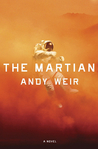
The Martian

The Martian The Martian by Andy Weir
My rating: 5 of 5 stars

A fascinating survival story with a smart, witty main character who doesn't do everything perfectly, but still manages to macguyver his way to surviving and participating in his own rescue. The science is complex but understandable, and more than anything, you can't help but root for Mark.

I love the style the book is written in, with Mark's portion of the story being presented as a diary, and the rest traditionally. It felt like we as readers were really in Mark's head, seeing what he saw and thinking what he thought. It was fun seeing the earth perspective as well, especially when they watched him remotely without communication, trying to interpret his actions. I can only imagine the heartbreak the rest of the Ares 3 crew went through after they first thought they lost Mark, and then knew they had abandoned him to die, even if it was necessary to save everyone else. There's no way all 6 of them would have survived on Mars that long, so it was a small blessing that only one of them was left behind, and that of the 6 of them, it was the botanist, who could figure out how to grow more food, and engineer, who could take things apart and put them back together.

If you've seen and enjoyed the movie, you'll enjoy the book as well. The two felt remarkably similar in tone and pacing, which can be quite rare in book to film adaptations.

I loved this quote at the end, and I'm choosing to believe it, too, just like Mark:

But really, they did it because every human being has a basic instinct to help each other out. I might not seem that way sometimes, but it's true. If a hiker gets lost in the mountains, people will coordinate a search. If a train crashes, people will line up to give blood. If an earthquake levels a city, people all over the world will send emergency supplies. This is so fundamentally human that it's found in every culture without exception. Yes, there are assholes who just don't care, but they're massively outnumbered by the people who do. And because of that, I had billions of people on my side. Pretty cool, eh?

View all my reviews